The world around us is digitizing at remarkable speed. Automation expands daily. Artificial intelligence integrates quietly into routine decisions. Every week, a new Digital Tool promises efficiency, autonomy, and optimization.
At the same time, media narratives amplify the urgency. Articles claim the future has already arrived. Social platforms suggest that life now runs entirely in a digital realm. This narrative builds a global consciousness. It encourages societies to accept and even manifest these technologies faster. However, reality remains more nuanced.
Yes, digital infrastructure has expanded dramatically. Yes, assistance systems are more accessible than ever. Yet the world has not fully transitioned. Many industries still operate in hybrid modes. Many professionals still rely on manual systems. Therefore, do not assume you are late or left behind.
Instead, approach this moment strategically. Think of digitalization as a powerful fire horse. It moves fast. It carries energy. However, it requires control and direction. Riding it without preparation creates chaos. Riding it wisely builds capability.
The entry point is simple. Start with a Digital Tool already available in your environment. Your workplace likely uses one. Many high-quality platforms are accessible online. Several are free or require minimal subscription. Moreover, these tools have matured rapidly over recent years.
Examine them closely. Study their structure. Observe their assumptions. Some Digital Tool designs prioritize user simplicity. They reduce friction and cognitive load. Others emphasize process, structure, and compliance. They protect function over comfort.
You may use either approach. However, begin where the road feels smooth. Early confidence accelerates learning. As your digital fluency grows, more complex systems become manageable. Eventually, mastery follows naturally.
Digital transformation is not a race. It is a progression. The wise professional builds skill deliberately, one Digital Tool at a time.

When the Digital Tool Serves the Organization but Ignores the User
Most Digital Tool initiatives begin with process diagrams. Engineers open workflow charts before speaking to technicians. Data architects define entities, states, and relationships early. Reporting requirements shape the database schema. Compliance defines permissions. Management dashboards drive structure. And all of this is a must.
This approach is not wrong. In fact, it protects integrity. A Digital Tool must respect traceability, auditability, and data consistency. Without structure, maintenance systems collapse into noise. Therefore, process-first thinking often feels safe and professional.

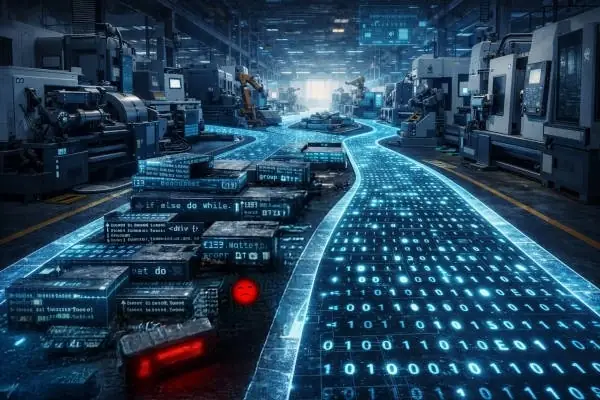
However, problems emerge when internal logic becomes visible friction. The Digital Tool begins to expose its architecture directly to the user. Mandatory fields multiply. Status transitions require multiple confirmations. Technical labels replace operational language. Navigation mirrors database hierarchy rather than task reality.
At this point, the Digital Tool becomes structurally correct but cognitively heavy. Users feel the weight of system design. Instead of enabling work, the tool demands attention. Instead of reducing effort, it adds to it.
This is where jargon blocks appear on the road. ERP logic surfaces in daily task entry. Asset taxonomy interrupts urgent repairs. Approval layers delay simple actions. The Digital Tool still leads to mastery. However, the path becomes unnecessarily rough.
Importantly, the issue is not structure itself. Structure sustains reliability. The issue is imbalance. When designers optimize for reporting more than execution, friction grows silently. Adoption weakens gradually.
The Digital Tool remains technically impressive. Yet it feels distant from the people who must use it.
The Digital Tool in Real Maintenance Environments
Maintenance environments expose design weaknesses immediately. Field technicians operate under noise, heat, and time pressure. Gloves reduce touch accuracy. Connectivity fluctuates. Interruptions are constant. In this context, every additional click matters.
A Digital Tool that demands perfect structured input during breakdown response creates resistance. Users seek shortcuts. Informal messaging returns. Paper notes reappear. Shadow spreadsheets quietly grow.
This behavior is often labeled as resistance to change. However, resistance frequently signals design friction. The Digital Tool may satisfy organizational logic but neglect operational reality. That gap widens over time.
Moreover, cognitive load plays a critical role. When a Digital Tool forces users to translate their natural workflow into system language, mental effort increases. Under stress, humans default to the simplest path available. If the official system feels harder than alternatives, bypassing it becomes rational.
Nevertheless, the solution is not to eliminate structure. Discipline matters. Data integrity matters. Asset history matters. The Digital Tool must protect process reliability. However, it should shield users from unnecessary architectural exposure.

Good design separates backend rigor from frontend simplicity. It hides complexity without sacrificing traceability. It reduces visible friction while preserving systemic strength.
The difference between a smooth road and a rocky one is rarely the destination. Both paths lead toward digital mastery. The distinction lies in how much cognitive effort the Digital Tool demands along the way.
From Digital Concept to Practical Collaboration: The MaintIQ Direction
The discussion about the Digital Tool becomes practical when we translate ideas into working solutions. One example is MaintIQ, an application under progressive development, shaped directly by maintenance practice. The goal is simple. Build a Digital Tool that supports thinking, collaboration, and structured execution without adding unnecessary friction.
Currently, MaintIQ guides users through structured problem-solving workflows. It supports 5 Whys and Fishbone analysis using clear, step-based interaction. Each step encourages logical progression while keeping cognitive load low. Instead of static forms, the Digital Tool builds the analysis dynamically as the user advances.
A key feature is collaborative visibility. Users can share an active analysis session with colleagues. Participants see updates in real time as the owner develops the logic. They can also add comments linked to specific causes or branches. This shared view transforms root cause analysis from an individual task into a team learning process.
In addition, MaintIQ includes a maintenance process assessment module. This feature helps teams evaluate their current practices against structured criteria. The Digital Tool highlights strengths and improvement areas without overwhelming users with excessive scoring complexity.
Importantly, MaintIQ follows a progressive architecture. The application is expanding carefully, based on real usage feedback. Future versions will include additional analysis workflows and practical calculators supporting daily maintenance decisions. The objective is not to collect features, but to create a reliable toolbox aligned with field reality.
Over time, MaintIQ aims to become a preferred Digital Tool for maintenance professionals seeking clarity and collaboration. The direction remains consistent. Keep structure strong, Keep interaction simple and, Keep users at the center.