Chaos is inevitable in maintenance. Panic is not. Posted 4/2/2026 on Maintenance World Magazine
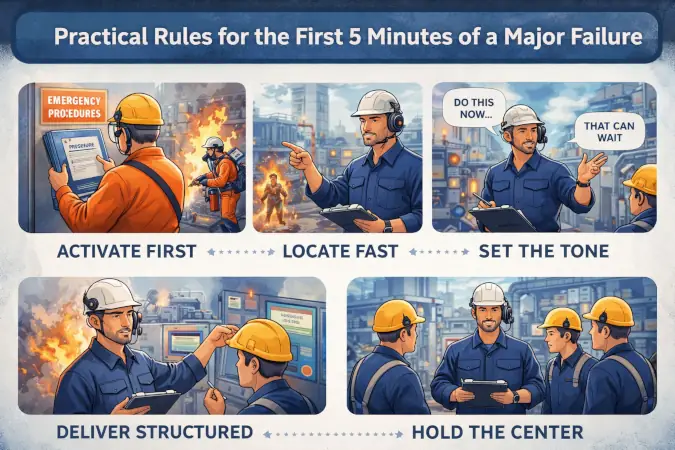
In the first five minutes of a major failure, you are not fixing the problem yet—you are defining how it will be solved. Your reaction sets the tone, your communication shapes the response, and your composure determines whether the situation stabilizes or escalates.
What’s changing today is that digital tools, especially AI, are no longer neutral. They amplify how we think, how we ask, and how we react under pressure.
This article brings together real shop-floor experience with a simple idea: the most valuable skill in maintenance is not only technical—it is the ability to stay centered when everything else is not.
🔗 Read the full article on Maintenance World: Chaos is inevitable in maintenance. Panic is Optional

Some details from the original article:
Chaos is Part of the System, Not a Failure of It
The idea that a well-maintained system should not fail is comforting, but it is not realistic. Even the most robust equipment operates under stress, variation, and hidden conditions that cannot always be predicted. Materials behave differently from one batch to another, environments shift, and human interaction introduces variables that no procedure can fully eliminate. What we often call “unexpected failure” is, in many cases, simply a risk that was present but not taken into account.
This becomes even more evident in complex operations, where systems are interconnected and dependencies are layered. A minor deviation in one area can trigger a chain of effects elsewhere, often in ways that are not immediately obvious. A cable overheats in one section, a transformer reacts abnormally in another, or a process behaves differently because of a subtle change in input. None of these events exist in isolation, and their combination is what creates the feeling of chaos.
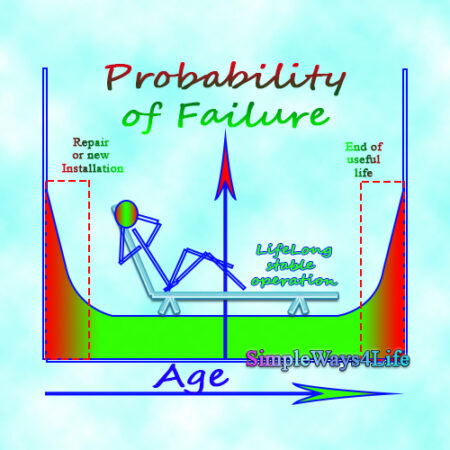
Failure is not the exception. It is part of the design. Maintenance in its core is all about managing failure symptoms. Then, managing failures if they occur.[2]
Real-world experience reinforces this understanding. Fires in cable trays, unexpected grounding of major transformers, or the introduction of contaminated material into a process are not theoretical scenarios. They happen -and I faced them personally during my career years – , sometimes despite strong controls and experienced teams. What matters is not the fact that they occur, but how quickly they are recognized and how effectively they are contained.
Turning Chaos Into Controlled Response: A Practical Mindset for Industrial Failures
- Accept disruptions as manageable situations, not unexpected failures — this removes emotional shock and enables clearer thinking.
- Shift focus from prevention-only thinking to active, composed crisis management.
- Build team habits around flexibility and pressure performance, not just stable-condition procedures.
- Train teams to expect variation and anticipate system interactions.
- Acknowledge that not every failure scenario will match a manual — adaptability is a core skill.
- Measure resilience by the quality of response, not the absence of failure.

🔗 Read the full article on Maintenance World: Chaos is inevitable in maintenance. Panic is Optional